



Parasite
Antiparasitics are a class of medications which are indicated for the treatment of parasitic diseases such as nematodes, cestodes, trematodes, and infectious protozoa.
Parasite Isoform Specific Products
All Product Categories
-
Parasite Related Products (2504)
Related Products (2504)

-
Related Compound Screening Libraries (1)
-
Parasite Isoform Comparison
-
Coumaran (Standard)
 0 ImagesCoumaran (Standard) is the analytical standard of Coumaran. This product is intended for research and analytical applications. Coumaran (2,3-Dihydrobenzofuran) is an AChE inhibitor with antileishmanial activity. Coumaran may acquire antiparasitic capabilities through activation of macrophages and exert immunomodulatory activity. Coumaran can be used as a biopesticide..
-
Berberine chloride (Standard)
 0 ImagesSynonyms: Natural Yellow 18 chloride (Standard)Berberine (chloride) (Standard) is the analytical standard of Berberine (chloride). This product is intended for research and analytical applications. Berberine chloride is an alkaloid that acts as an antibiotic. Berberine chloride induces reactive oxygen species (ROS) generation and inhibits DNA topoisomerase. Antineoplastic properties.
-
Niclosamide monohydrate
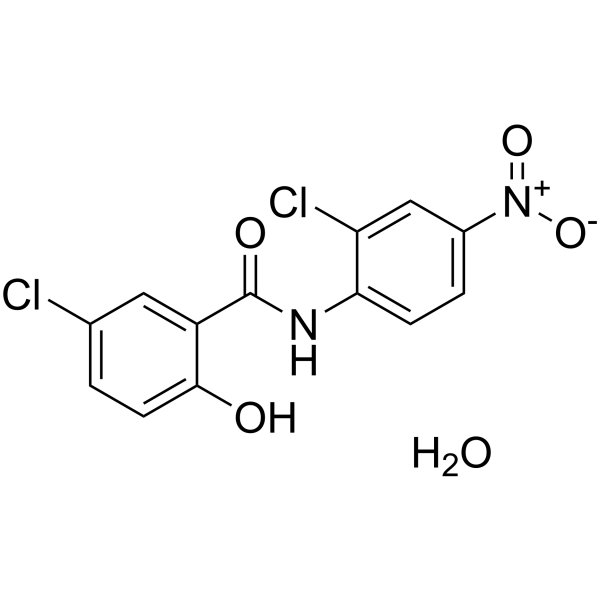 0 ImagesCat. No.: HY-B0497BCAS No.: 73360-56-2Synonyms: BAY2353 monohydrateNiclosamide (BAY2353) monohydrate is an orally active antihelminthic agent used in parasitic infection research. Niclosamide monohydrate is a STAT3 inhibitor with an IC50 of 0.25 μM in HeLa cells. Niclosamide monohydrate has biological activities against cancer, and inhibits DNA replication in Vero E6 cells.
-
Antiparasitic agent-23
 0 ImagesAntiparasitic agent-23 (compound 14) is an anthelmintic and insecticide that inhibits insect or helminth parasitism.
-
Pamaquine
 0 ImagesPamaquine is an 8-aminoquinoline antimalarial agent. Pamaquine has neurotoxicity and can damage specific neuro-anatomical structures, leading to deficits of neurologic function in Rhesus monkeys models.
-
Ornidazole diol
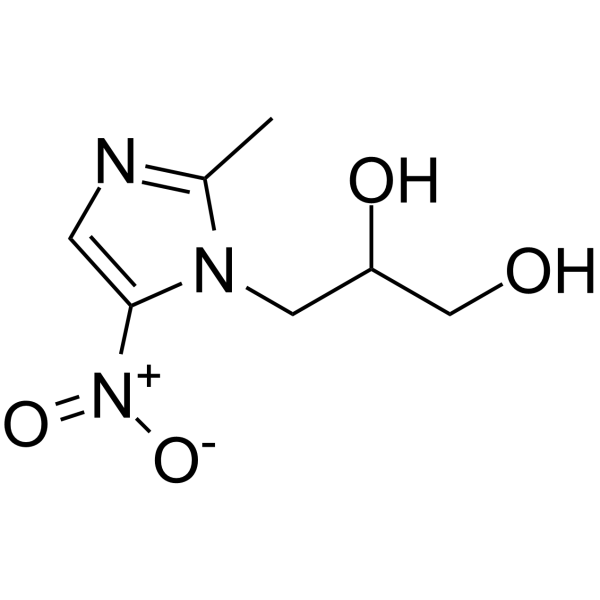 0 ImagesSynonyms: Ro 11-2616Ornidazole diol (Ro 11-2616) is the diol of Ornidazole (HY-B0508) which is rapidly hydrolyzed in alkaline solution. Ornidazole (Ro 7-0207) is a 5-nitroimidazole derivative that is antiprotozoan and anaerobic.
-
epi-Ivermectin B1a
 0 ImagesSynonyms: 22,23-Dihydro avermectin B1a; epi-Dihydro avermectin B1aepi-Ivermectin B1a is a key related substance of Ivermectin (HY-15310), primarily existing as a process-related impurity or potential degradation product in ivermectin-based antiparasitic formulations. epi-Ivermectin B1a can be used for the study of internal/external parasites in cattle.
-
Dihydroartemisinin-d5
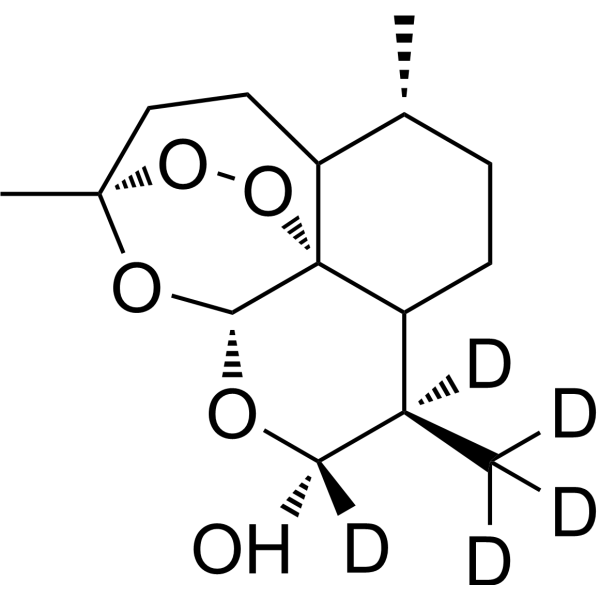 0 ImagesCat. No.: HY-N0176S3Synonyms: Dihydroqinghaosu-d5; β-Dihydroartemisinin-d5; Artenimol-d5Dihydroartemisinin-d5 (Dihydroqinghaosu-d5) is the d5-labeled Dihydroartemisinin (HY-N0176). Dihydroartemisinin is an orally active metabolite of rtemisinin (HY-B0094) and antimalarial agent. Dihydroartemisinin induces Autophagy by inhibiting NF-κB activation. Dihydroartemisinin promotes ROS accumulation. Dihydroartemisinin exhibits anticancer activity in esophageal cancer cells. Dihydroartemisinin shows schistosomicidal activity against juvenile and adult worms of Schistosoma japonicum, reduces worm burden, and displays antiparasitic activity. Dihydroartemisinin can be used in research related to multiple myeloma, promyelocytic leukemia, esophageal cancer, and Schistosoma japonicum infection.
-
Caryophyllene oxide (Standard)
 0 ImagesCaryophyllene oxide (Standard) ((-)-Caryophyllene oxide (Standard)) is the analytical standard of Caryophyllene oxide (HY-N3544). This product is intended for research and analytical applications. Caryophyllene oxide is a bicyclic sesquiterpene with anticancer effects. Caryophyllene oxide induces apoptosis of PC-3 cells. Caryophyllene oxide shows analgesic and anti-inflammatory activities. Caryophyllene oxide has insecticidal, antioxidant, antimicrobial, antifungal, and antiparasitic properties.
-
BRD9185
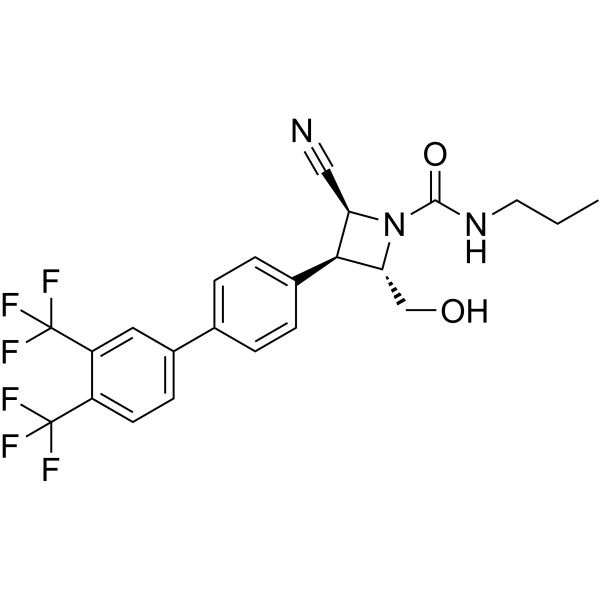 0 ImagesCat. No.: HY-120924CAS No.: 2057420-29-6BRD9185 is a Dihydroorotate dehydrogenase (DHODH) inhibitor, with an EC50 of 16 nM against multidrug-resistant blood-stage parasites in vitro and is curative after just three doses in a P. berghei mouse model.
-
(S)-Hydroxychloroquine
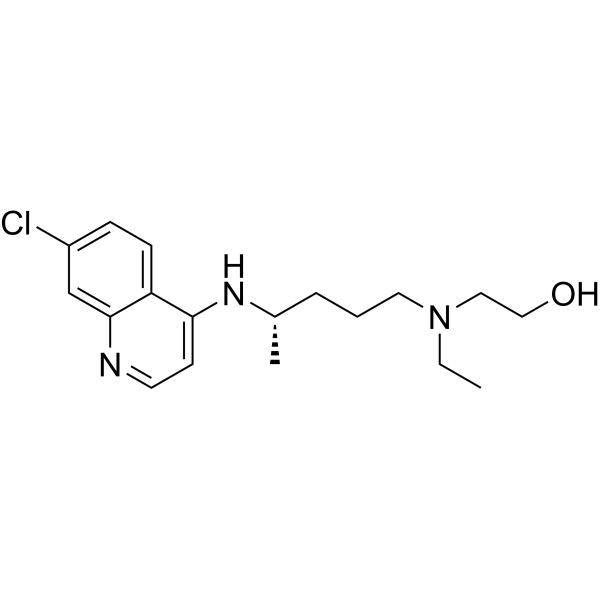 0 ImagesCat. No.: HY-B1370ACAS No.: 137433-24-0Synonyms: (S)-HCQ(S)-Hydroxychloroquine ((S)-HCQ) is the enantiomer of Hydroxychloroquine. Hydroxychloroquine, a synthetic antimalarial agent, inhibits Toll-like receptor 7/9 (TLR7/9) signaling, and shows efficiently inhibits SARS-CoV-2 infection in vitro.
-
4-Ethylbenzaldehyde (Standard)
 0 ImagesCat. No.: HY-W012657RCAS No.: 4748-78-14-Ethylbenzaldehyde (Standard) is the analytical standard of 4-Ethylbenzaldehyde (HY-W012657). This product is intended for research and analytical applications. 4-Ethylbenzaldehyde is an aldehyde type organic compound with an almond-like odor. 4-Ethylbenzaldehyde is naturally present in various foods such as grilled meat, black tea, peanuts, etc. 4-Ethylbenzaldehyde has significant effects in controlling plant parasitic nematodes. 4-Ethylbenzaldehyde has genotoxicity and potential for liver damage in zebrafish models.
-
Doxycycline-d3 (hydrochloride)
 0 ImagesCat. No.: HY-N0565ASDoxycycline-d3 hydrochloride is deuterium labeled Doxycycline hydrochloride (HY-N0565A). Doxycycline hydrochloride is an orally active highly lipophilic, tissue-permeable MMP inhibitor with broad-spectrum antibacterial activity. Doxycycline hydrochloride is also a semi-synthetic antibiotic with chelating properties, which blocks bacterial protein synthesis and inhibits extracellular matrix degradation through interactions with zinc and calcium atoms. Doxycycline hydrochloride also inhibits mitochondrial biogenesis, translation, and the expression of respiratory chain proteins. Doxycycline hydrochloride induces apoptosis, inhibits autophagy and EMT, downregulates stem cell markers, and activates the PI3K-AKT pathway, thereby effectively inhibiting the viability and proliferation of cancer cells such as breast cancer cells. Doxycycline hydrochloride also promotes the survival and self-renewal of embryonic stem cells and neural stem cells, and reduces the frequency of medium changes in culture. Doxycycline hydrochloride has been applied in studies related to breast cancer, prostate cancer, bladder cancer, and other cancers.
-
Doxycycline-13C,d3
 0 ImagesCat. No.: HY-N0565S3CAS No.: 1902958-13-7Doxycycline-13C,d3 is 13C and deuterium labeled Doxycycline (HY-N0565). Doxycycline is an orally active highly lipophilic, tissue-permeable MMP inhibitor with broad-spectrum antibacterial activity. Doxycycline is also a semi-synthetic antibiotic with chelating properties, which blocks bacterial protein synthesis and inhibits extracellular matrix degradation through interactions with zinc and calcium atoms. Doxycycline also inhibits mitochondrial biogenesis, translation, and the expression of respiratory chain proteins. Doxycycline induces apoptosis, inhibits autophagy and EMT, downregulates stem cell markers, and activates the PI3K-AKT pathway, thereby effectively inhibiting the viability and proliferation of cancer cells such as breast cancer cells. Doxycycline also promotes the survival and self-renewal of embryonic stem cells and neural stem cells, and reduces the frequency of medium changes in culture. Doxycycline has been applied in studies related to breast cancer, prostate cancer, bladder cancer, and other cancers.
-
Liposomal Amphotericin B
 0 ImagesCat. No.: HY-177849Synonyms: Amphotericin B liposomeLiposomal Amphotericin B (Amphotericin B liposome) is a liposomal formulation of Amphotericin B (HY-B0221) that can cross the blood-brain barrier. Liposomal Amphotericin B binds to fungal cell walls and releases Amphotericin B to bind Ergosterol (HY-N0181), inducing pore formation, ion leakage, and fungal cell death. Liposomal Amphotericin B exhibits fungicidal activity against a broad spectrum of fungal pathogens, also shows activity against Leishmania, and the liposomal formulation has lower acute and chronic toxicity as well as a lower risk of fungal resistance.
-
(Rac)-Efavirenz (Standard)
 0 ImagesCat. No.: HY-10572BRCAS No.: 177530-93-7Synonyms: (Rac)-DMP 266 (Standard); (Rac)-EFV (Standard); (Rac)-L-743726 (Standard)(Rac)-Efavirenz (Standard) is the analytical standard of (Rac)-Efavirenz. This product is intended for research and analytical applications. (Rac)-Efavirenz is the isomer of Efavirenz (HY-10572). Efavirenz (DMP 266) is a potent inhibitor of the wild-type HIV-1 reverse transcriptase with a Ki of 2.93 nM and exhibits an IC95 of 1.5 nM for the inhibition of HIV-1 replicative spread in cell culture.
-
(R)-Hydroxychloroquine
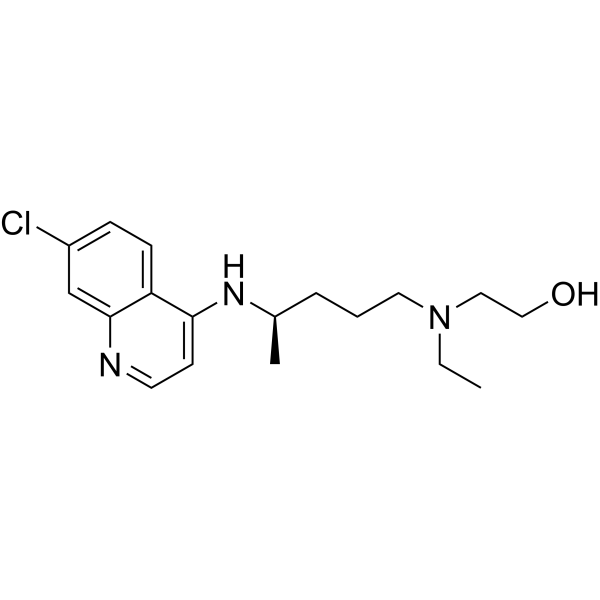 0 ImagesCat. No.: HY-B1370BCAS No.: 137433-23-9Synonyms: (R)-HCQ(R)-Hydroxychloroquine is the enantiomer of Hydroxychloroquine. Hydroxychloroquine is a synthetic antimalarial agent which can also inhibit Toll-like receptor 7/9 (TLR7/9) signaling. Hydroxychloroquine is efficiently inhibits SARS-CoV-2 infection in vitro.
-
Methyl palmitate-13C16
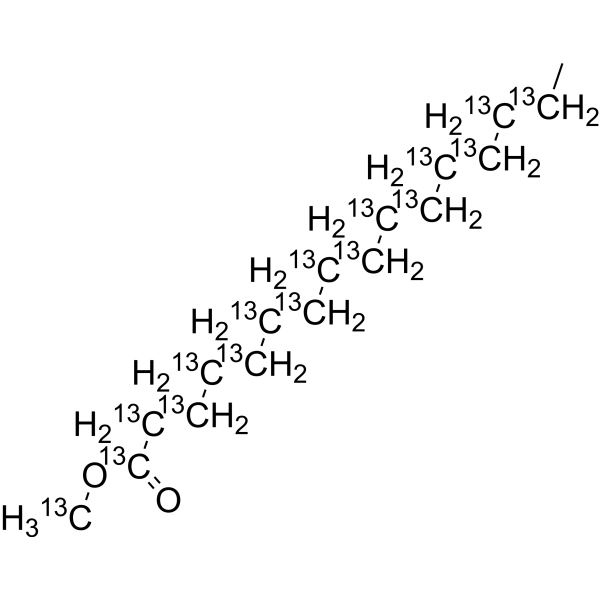 0 ImagesCat. No.: HY-N1482SPurity: 99.80%Methyl palmitate-13C16 is the 13C labeled Methyl palmitate. Methyl palmitate, an acaricidal compound occurring in green walnut husks, inhibits phagocytic activity and immune response. Methyl palmitate also posseses anti-inflammatory and antifibrotic effects.
-
FNDR-20123 free base
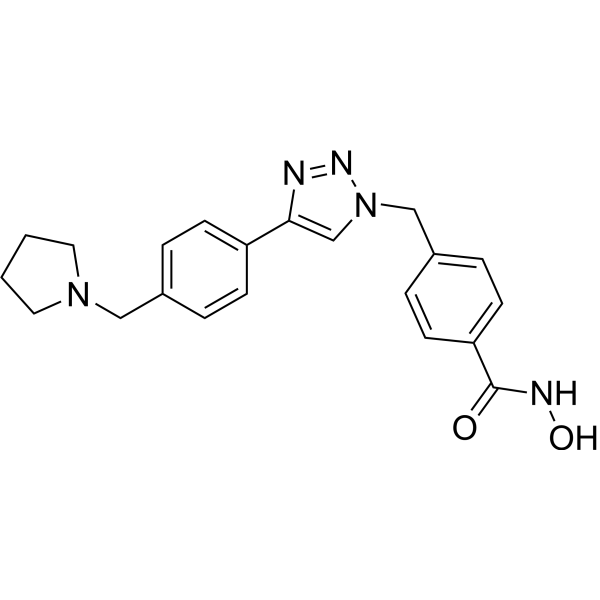 0 ImagesCat. No.: HY-131708CAS No.: 1267502-34-0FNDR-20123 free base is a safe, first-in-class, and orally active anti-malarial HDAC inhibitor with IC50s of 31 nM and 3 nM for Plasmodium and human HDAC, respectively. FNDR-20123 free base exerts anti-malarial activity against Plasmodium falciparum asexual stage (IC50=41 nM) and sexual blood stage (IC50=190 nM for male gametocytes). FNDR-20123 free base inhibits HDAC1, HDAC2, HDAC3, HDAC6, and HDAC8 (IC50=25, 29, 2, 11, and 282 nM, respectively) and inhibits Class III HDAC isoforms at nanomolar concentrations.
-
TCMDC-135051 TFA
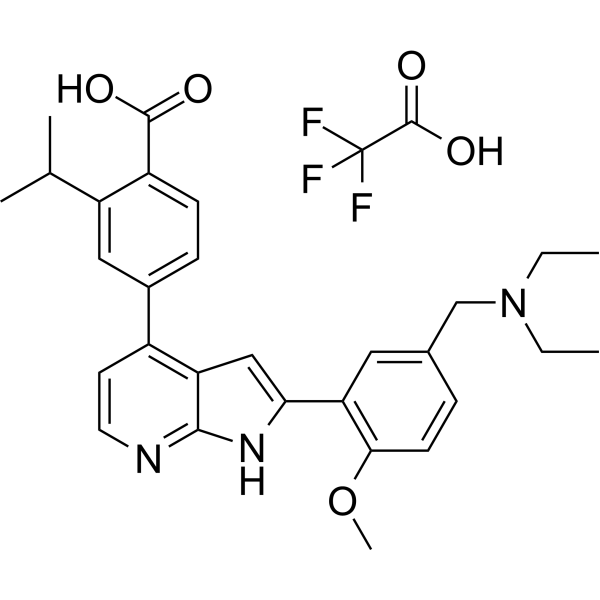 0 ImagesCat. No.: HY-126323ACAS No.: 2571578-55-5TCMDC-135051 TFA is a highly selective and potent protein kinase PfCLK3 inhibitor with low off-target toxicity. TCMDC-135051 TFA prevents trophozoite-to-schizont transition, disrupts transcription and reduces transmission to the mosquito vector. TCMDC-135051 TFA has antiparasiticidal activity (EC50=320 nM).



